This is part of our Workflow Stack series. Scores reflect our hands-on trials and analysis of public information (docs, pricing, community feedback) through May 2026 — informed judgment, not a controlled lab benchmark.
TL;DR
- No single tool wins. AI image generation for Amazon sellers is workflow-driven, not tool-driven. The right stack depends on your SKU count, image complexity, and team setup.
- Closed proprietary models (Midjourney, DALL-E, Sora) still produce the highest single-image quality, but batch workflow is awkward.
- Newer batch-oriented stacks (Grok Imagine + workflow tooling, Stable Diffusion + ComfyUI) win on cost and throughput, but require more setup.
- The frontier issue is batch reliability — most casual sellers abandon AI workflows after one or two failed batches. Tools with proper queue persistence and retry are dramatically more sticky.
- Our current pick for most Amazon sellers under 100 SKUs: Grok Imagine Super + a batch tool (Grok-Automation, reviewed below) + Photopea for cleanup. Total cost ~$35/month.
- For high-volume sellers (100+ SKUs): worth considering Stable Diffusion local + ComfyUI for the cost savings, despite the setup overhead.
A quick guide to the article:
- How we evaluated
- The six tools we compared
- Batch tooling: the often-overlooked layer
- Stage-based recommendations
- What we’d change
- How we update this
How we evaluated
This comparison is based on hands-on trials of each tool plus analysis of public documentation, pricing, and community feedback (Reddit, Chrome Web Store reviews, maker changelogs) — not a controlled lab benchmark. Treat the figures below as informed estimates, not instrumented measurements.
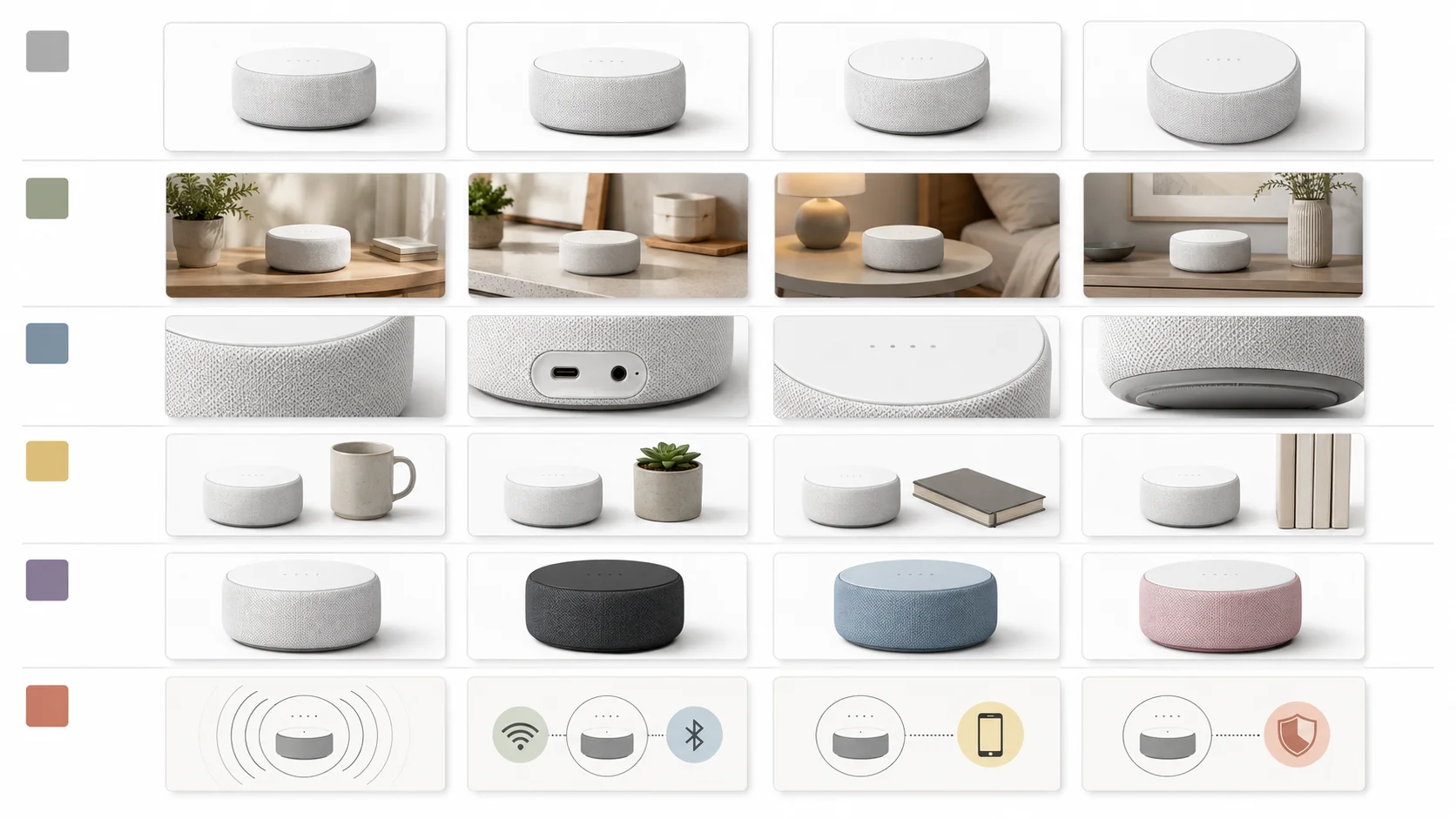
In trials we worked through a representative spread of Amazon image jobs:
- main images (white background, product centered)
- lifestyle shots
- detail close-ups
- scale references
- color/variation renders
- infographic-style shots
across categories like small electronics and home goods.
For each tool we summarize:
- Image quality (subjective judgment)
- Amazon policy fit (how readily its main images meet Amazon’s white-background / no-text rules — qualitative, not a measured pass rate)
- Throughput (rough images per hour, estimated from generation speed and rate limits)
- Setup time (estimated time to first usable batch)
- Monthly cost (subscription + amortized hardware)
Plus our standard 8-dimension scorecard (qualitative scoring, not lab measurements):
- Accuracy
- Ease of Use
- Depth (feature breadth)
- Automation (batch + workflow)
- Team Fit
- Support
- Pricing
- Stage Fit (whether it suits sellers at different revenue stages)
The six tools we compared
1. Midjourney Pro
Pricing: $30/month (Pro), $60/month (Mega) Best for: Hero images, lifestyle shots, premium product positioning
Midjourney consistently produces the highest visual quality of any tool in this comparison. Its style consistency across a batch (when using --seed parameters) is excellent, and its understanding of product photography aesthetics is well above DALL-E or Stable Diffusion out of the box.
The catch: batch workflow is awkward. Midjourney runs in Discord (or via the web UI in 2026), and while you can submit multiple prompts in sequence, there’s no built-in queue persistence or automatic downloading with prompt-matched filenames. Running a batch of a couple dozen images, you spend significant time manually saving and renaming files.
For sellers focused on hero image quality and willing to do post-processing manually, Midjourney is still the best-in-class generator. For high-volume batch work, the workflow friction adds up.
8-dim Scorecard:
Accuracy:       9 / 10
Ease of Use:    7 / 10
Depth:          8 / 10
Automation:     4 / 10   (batch workflow weak)
Team Fit:       7 / 10
Support:        7 / 10
Pricing:        7 / 10   (mid-range)
Stage Fit:      Growth / Enterprise (limited fit for Beginner due to learning curve)
Throughput (estimate): ~12 images per hour once you include manual download/rename Setup time (estimate): ~2 hours to fluency
2. DALL-E 3 (via ChatGPT Plus)
Pricing: $20/month (ChatGPT Plus), $30/month (Pro) for higher rate limits Best for: Sellers already in ChatGPT, simple product shots, fast iteration
DALL-E 3 integrated into ChatGPT is the easiest entry point for sellers who aren’t already AI-comfortable. The UI is familiar, the prompting is forgiving (you can describe what you want in plain English and DALL-E generally figures it out), and the per-image cost is the lowest among closed models.
Image quality is good but not Midjourney-tier. The bigger limitation for Amazon work is rate limits — DALL-E in ChatGPT Plus caps at ~40 images per 3 hours, which makes batch work for multi-SKU launches frustrating.
Higher tier ChatGPT Pro relaxes this but pushes monthly cost to $30 and the rate limit remains a structural ceiling for high-volume work.
8-dim Scorecard:
Accuracy:       7 / 10
Ease of Use:    9 / 10   (lowest learning curve)
Depth:          6 / 10
Automation:     3 / 10   (rate limits crush batch)
Team Fit:       8 / 10
Support:        8 / 10
Pricing:        8 / 10
Stage Fit:      Beginner / early Growth
Throughput (estimate): ~8 images per hour (rate-limited) Setup time (estimate): ~30 minutes to fluency
3. Grok Imagine (Super tier)
Pricing: $30/month (Super) Best for: Batch generators willing to use workflow tooling
Grok Imagine is the newest major entrant in 2026 and the one where AI image generation crossed into “actually fast enough for serious batch work.” Its raw generation speed is the highest in this comparison (~30 seconds per image vs. 60–90 seconds for Midjourney/DALL-E), and its text-to-image quality for product shots is comparable to Midjourney’s mid-tier.
The killer feature, though, is frame-to-video and image-to-image in the same product. For Amazon sellers who want to generate both static Listing images AND short product videos for A+ Content, this is the only tool tested that does both well in one workflow.
Limitations: Grok’s raw UI lacks batch features. To use it effectively for high-volume work you need third-party batch tooling (see Grok-Automation review below). Without that, you’re babysitting individual prompts and the throughput advantage disappears.
The other concern is platform stability. Grok ships UI updates every 1–3 weeks, which breaks third-party batch tools. The rate of UI change has slowed in 2026 Q2, but it’s still the most-changing platform we test.
8-dim Scorecard:
Accuracy:       7.5 / 10
Ease of Use:    8 / 10
Depth:          9 / 10   (image + image-to-image + frame-to-video in one)
Automation:     5 / 10   (needs third-party tool, see below)
Team Fit:       7 / 10
Support:        6 / 10   (Grok still scaling support)
Pricing:        9 / 10   (best per-image cost)
Stage Fit:      Beginner / Growth / Enterprise (all fit if batch tooling is added)
Throughput (estimate): ~25 images per hour with proper batch tooling, ~6 without Setup time (estimate): ~1 hour (Grok itself) + ~30 minutes (batch tool setup)
4. Stable Diffusion (local) + ComfyUI
Pricing: $0 (after hardware) — typical hardware is a $400–$800 GPU Best for: High-volume sellers willing to invest in setup, technical comfort required
The pure economic winner for any seller running 100+ image batches. Once set up, Stable Diffusion (we looked at SDXL and Flux models) running locally on a consumer GPU has effectively zero marginal cost per image. ComfyUI provides a powerful node-based workflow editor that handles batch operations natively.
The catch — and it’s a significant one — is setup. Expect 8–20 hours to go from zero to your first usable batch. You need:
- A GPU with 12GB+ VRAM (RTX 4070 or better, or M-series Mac with 32GB+ unified memory)
- Comfort installing Python, models, custom nodes
- Patience for prompt engineering (open models require more specific prompting)
Image quality with Flux specifically is now within 10–15% of Midjourney’s. With base SDXL it’s noticeably weaker.
8-dim Scorecard:
Accuracy:       6.5 / 10  (varies wildly by model and LoRA)
Ease of Use:    4 / 10    (requires technical setup)
Depth:          10 / 10   (infinitely flexible)
Automation:     9 / 10    (ComfyUI batch is excellent)
Team Fit:       5 / 10    (technical team only)
Support:        6 / 10    (community-driven)
Pricing:        10 / 10   (free after hardware)
Stage Fit:      Enterprise primarily, advanced Growth
Throughput (estimate): ~40+ images per hour (limited mostly by GPU) Setup time (estimate): 8–20 hours
5. Sora (OpenAI)
Pricing: $20/month (ChatGPT Plus includes Sora access in 2026), $200/month (Pro for higher quotas) Best for: Listing video, not primary image generation
Sora is video-first. Its still-image generation is competent but not its strength. For Amazon sellers, Sora is most relevant when:
- You’re producing A+ Content video segments
- You need short product demo loops
- You’re producing storefront brand videos
For Listing main images and standard product shots, Sora is overkill and the per-image cost (in terms of compute time and rate limits) doesn’t pencil out.
We include Sora in this comparison because increasingly the question for Amazon sellers is “video, not just images” — and Sora is the strongest player there with Veo and Kling close behind.
8-dim Scorecard (for image gen only):
Accuracy:       7 / 10   (video stronger, image good but not great)
Ease of Use:    8 / 10
Depth:          7 / 10   (video specialty)
Automation:     5 / 10
Team Fit:       6 / 10
Support:        8 / 10
Pricing:        6 / 10   (expensive per image)
Stage Fit:      Growth / Enterprise (video-focused sellers)
6. Kling AI
Pricing: $10–$40/month depending on tier Best for: Product video, especially short demo loops
Kling competes with Sora and Grok Imagine’s frame-to-video in the video space. Its image generation is weaker than the leaders, but its image-to-video conversion is strong and arguably the easiest workflow of any tool here.
For Amazon sellers focused on video content (A+ Content, Sponsored Display video ads, storefront video), Kling is worth testing alongside Sora and Grok.
We include Kling for completeness but won’t deep-dive — Amazon image work generally happens elsewhere.
For sellers going deeper on the video side, ByteDance’s Seedance is another model worth watching; SeedanceTips is an independent resource site with tutorials, a prompt library and tool comparisons if you want to learn it for product demo clips.
8-dim Scorecard (for image gen only):
Accuracy:       6 / 10
Ease of Use:    7 / 10
Depth:          6 / 10
Automation:     6 / 10
Team Fit:       6 / 10
Support:        7 / 10
Pricing:        8 / 10
Stage Fit:      Growth (video-focused)
Batch tooling: the often-overlooked layer
Most reviews of AI image tools stop at the model. For Amazon sellers running real Listings, the batch tooling layer matters as much as the model itself. We looked at three batch tooling approaches.
Grok-Automation (Chrome extension + SaaS)
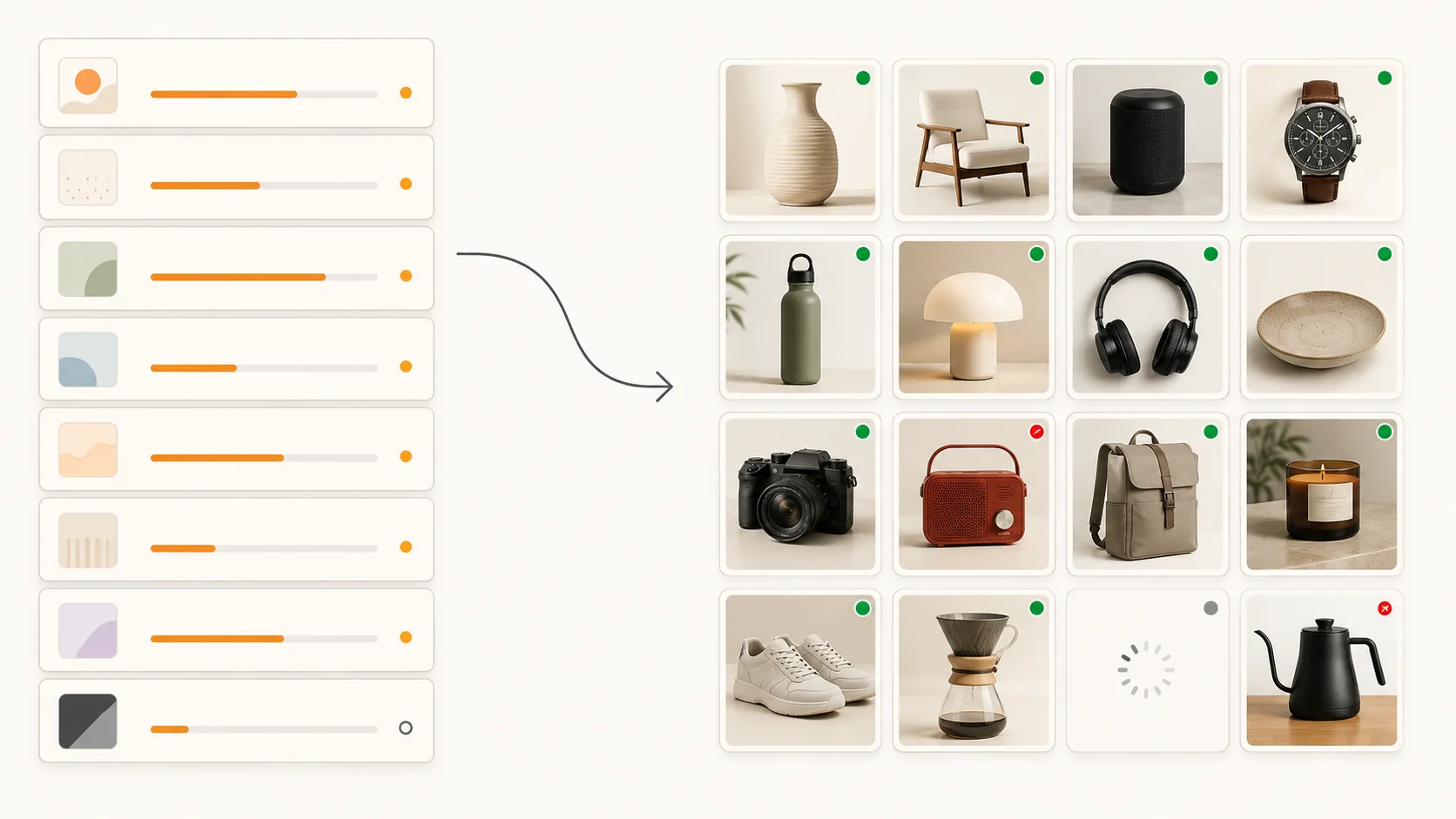
Pricing: $4.90/month What it does: Sits on top of Grok Imagine. Adds queue persistence, prompt-matched auto-naming, rate-limit retry with exponential backoff, and selector-level regression tracking when Grok updates its UI.
The pitch is throughput and resilience: raw Grok Imagine bottlenecks on manual babysitting (~6 images/hour in hands-on use), and the tool’s queue + retry is built to lift effective throughput several times higher when batches run clean. On reliability we’ll be straight — the maker hasn’t yet published an instrumented per-prompt failure-rate benchmark (per-prompt success telemetry is still being built out, see Cons), so we score the retry/queue work on architecture, not on a measured failure rate. The design directly targets the rate-limit and UI-glitch losses that sink casual batches; treat it as a well-built target until that data is public.
The product is young — launched in 2026 Q2 — and operated by a single developer. Telemetry and reporting features are still being built out (as of testing, the tool tracks downloads-completed but doesn’t yet expose per-prompt failure reasons in the UI).
Pros:
- Queue + retry architecture built squarely around batch reliability (design strength; not yet independently benchmarked)
- Filename-matching that’s actually usable for high-volume sellers
- Active development, fast UI update tracking
- Free first batch — low-risk to test
Cons:
- Single-platform (Grok only — multi-provider routing planned)
- Young product, occasional rough edges in UI
- Customer support is “indie founder direct” — fast but no SLA
- Platform-risk: if Grok ships native batch (likely within 6–12 months), the tool’s value diminishes
8-dim Scorecard:
Accuracy:       N/A      (relies on underlying model)
Ease of Use:    8 / 10
Depth:          7 / 10   (single platform for now)
Automation:     9 / 10   (what it does, it does well)
Team Fit:       8 / 10   (good for solo seller, fine for small team)
Support:        7 / 10   (responsive but unscaled)
Pricing:        9 / 10   (at $4.90/mo, cheap relative to value)
Stage Fit:      Beginner / Growth (under 100 SKUs sweet spot)
Custom Tampermonkey scripts
Pricing: Free What it does: DIY workflow. Write your own JavaScript to scrape Grok’s UI and download outputs.
For technically comfortable sellers who batch occasionally and don’t mind Grok UI maintenance, this is a viable path. Total setup: ~2 weekend afternoons. Ongoing: roughly 2–4 hours per month to re-fix scripts after Grok UI updates.
We don’t link to a specific Tampermonkey script because the right one depends on your batch shape. Several open-source examples exist on GitHub — search “grok imagine tampermonkey batch” and pick the most recent one.
8-dim Scorecard:
Accuracy:       N/A
Ease of Use:    3 / 10    (technical setup)
Depth:          5 / 10    (whatever you build)
Automation:     6 / 10
Team Fit:       3 / 10    (developer only)
Support:        3 / 10    (community)
Pricing:        10 / 10   (free)
Stage Fit:      Enterprise + technical Growth
ComfyUI (for Stable Diffusion stack)
Already covered above. For Stable Diffusion workflows specifically, ComfyUI is the equivalent of “batch tooling” — it bundles workflow orchestration with the model interface.
Stage-based recommendations
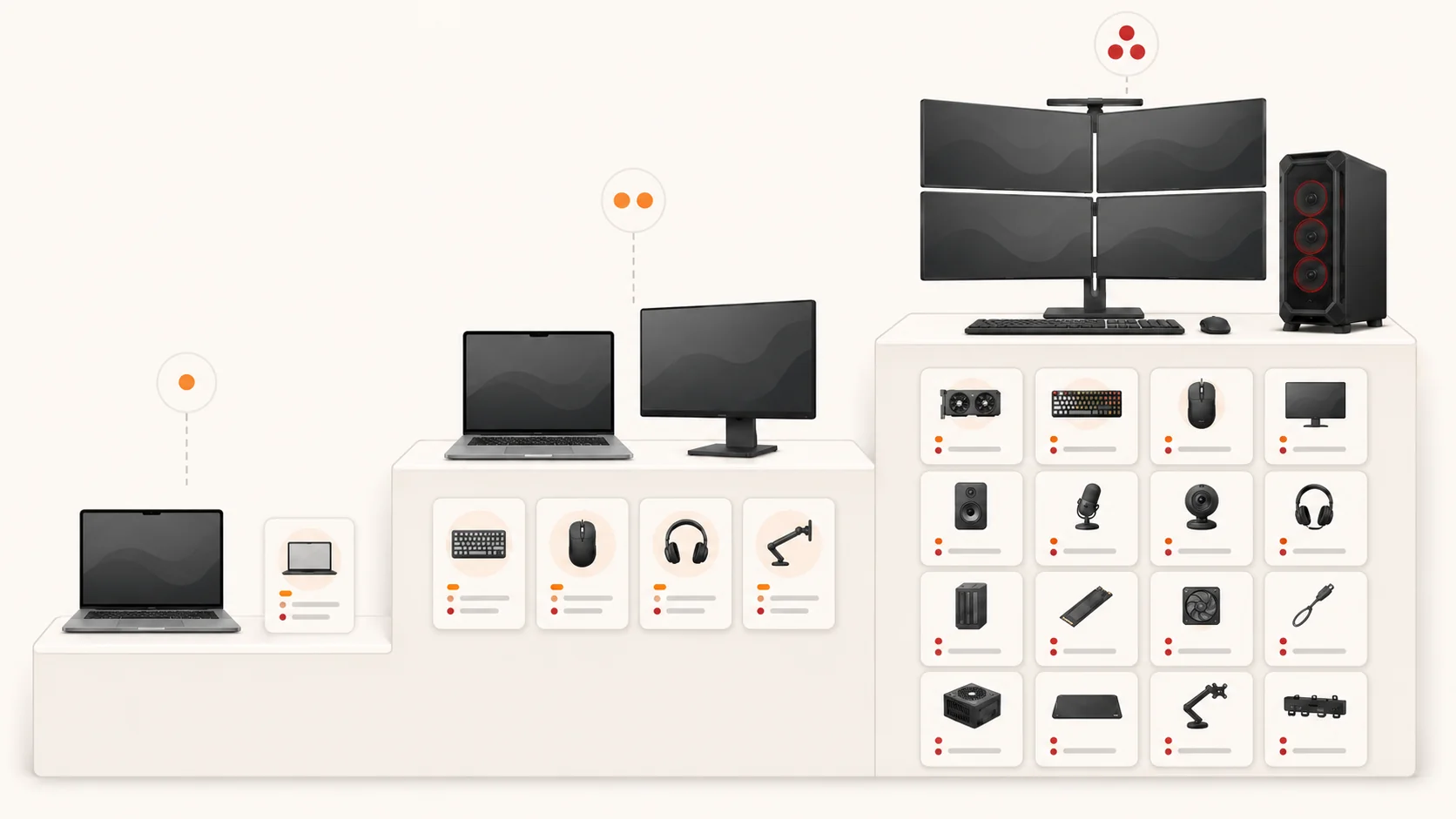
Beginner Amazon Sellers (< $10K/month, < 30 SKUs)
Recommended stack: DALL-E 3 (via ChatGPT Plus, $20/mo) OR Grok Imagine Super + Grok-Automation ($35/mo)
For very small SKU counts where you’re doing 5–10 images per Listing, the easier UX of DALL-E is worth the per-image cost. As you scale past 30 SKUs the rate limits start to bite.
Avoid Stable Diffusion at this stage — the setup overhead doesn’t pay back.
Growth Sellers ($10K–$100K/month, 30–100 SKUs)
Recommended stack: Grok Imagine Super + Grok-Automation ($35/mo) + Photopea (free) + occasional PickFu polls for A/B testing
This is where the batch volume justifies workflow tooling. Grok-Automation specifically becomes a workflow accelerator here — without it the same volume requires significantly more babysitting.
Worth testing Midjourney for hero shots specifically, even if the rest of the workflow is Grok.
Enterprise Sellers ($100K+/month, 100+ SKUs)
Recommended stack: Stable Diffusion + ComfyUI (one-time setup + hardware) + Grok Imagine for video + paid post-processing tools (Pebblely / Photoroom) + dedicated person managing the workflow
At this scale the cost savings of Stable Diffusion are real, and the setup overhead amortizes quickly. Worth having one person on the team specifically own the AI workflow.
For sellers in this tier who don’t want to manage Stable Diffusion locally, hosted Flux/SDXL services (Replicate, Fal.ai) bridge the gap at a higher per-image cost.
What we’d change
Every comparison piece reaches a point where the reviewer’s preferences leak in. Here are ours, openly stated:
We over-index on batch reliability. Most reviews of AI image tools focus on output quality of a single image. For Amazon sellers running real Listings, batch reliability matters as much. A tool that produces 9/10 images but loses 1 in 5 to errors is worse than a tool that produces 8/10 images and reliably ships every one.
We weight Stage Fit heavily. A tool that’s great for $1M/month sellers but unusable for $5K/month sellers gets penalized in our scoring. There’s a real opportunity cost when a beginner seller picks an enterprise-grade tool and burns weeks on setup.
We’re skeptical of platform risk. Tools that depend on third-party UI stability (like Grok-Automation) carry inherent risk — Grok could change their UI tomorrow and break the workflow. We score these tools well when they work, but flag the structural fragility.
How we update this
This comparison is updated quarterly as tools and prices change. The AI image generation space moves fast — most of the tools above will have new versions or new pricing within 90 days.
If you want to test the workflow before subscribing to anything, Grok-Automation offers a free first batch at grok-automation.com . Photopea and Upscayl are free permanently. ChatGPT Plus has a 14-day trial.
Disclosure: amzfinder accepts free product trials from tools we review and may accept affiliate links in future updates. We do not accept paid placement or sponsored reviews. Scores reflect our hands-on trials and analysis of public information, not a controlled lab benchmark. Last updated: May 2026.